What plating is
A pin or coin starts as a plain metal shape: brass, copper or iron when it's die struck, zinc alloy when it's die cast. Electroplating gives it color. The pieces are cleaned and hung in a bath containing a dissolved metal, and an electric current deposits a thin, even layer of that metal over the surface. Gold outlines, silver lettering and a dark gunmetal border all come from this step.
When it happens depends on the style. Soft enamel pieces are plated first and colored afterward. Hard enamel pieces are filled and polished flat first, then plated, so the metal lines get a fresh, even finish. Die struck pieces with no enamel are plated and, for an antique look, darkened and polished back.
Plating finishes at a glance
| Finish | Look | Best for | Soft / hard enamel |
|---|---|---|---|
| Gold | Bright, warm yellow metal | Awards, service pins, logos, formal coins | Both |
| Silver | Bright, cool white metal | Modern logos, blue and green palettes, police and fire | Both |
| Copper | Warm reddish-brown metal | Rustic, outdoor, vintage and craft designs | Both |
| Black nickel | Glossy dark gray; can look silvery at an angle | Bright enamel colors, modern and dark designs | Both |
| Antique gold, silver, copper, brass or bronze | Darkened recesses, polished high points | Die struck and 3D pins, coins, medals, fine detail | Best with soft enamel or no color; less visible on flat hard enamel |
| Rose gold | Soft pinkish gold | Fashion, wedding, lifestyle and art pins | Both |
| Rainbow | Iridescent, shifting colors; varies piece to piece | Art pins, collector variants, limited editions | Soft enamel only (polishing removes it on hard enamel) |
| Dyed black | Flat, true black metal | Line art and graphic designs with bright fills | Soft enamel only |
| Dual plating | Two finishes on one piece | Crests, coins, buckles, two-tone logos | Confirmed on your proof |
What's possible also depends on the design, so your proof always names the exact finish before anything is made.
Gold
Gold is the classic finish, and it reads as recognition: service and award pins, nursing and graduation pins, corporate logos and formal coins. It pairs well with deep red, navy, white and black enamel. People shopping for gold plated pins are after this look: a thin electroplated layer in a gold finish over a base metal, not solid gold. Gold itself doesn't tarnish, so the color holds well; on pieces handled every day, the highest points can eventually wear.
Silver and nickel
Silver-tone plating is bright and cool. It suits blues, greens, purples and pastels, and brands with a clean, modern look. Depending on the maker, a silver finish may be silver or nickel, so if it matters, for example for a wearer with a nickel allergy, ask which metal is used. Real silver can darken over time with air and handling, so store silver pins in a bag or case.
Copper
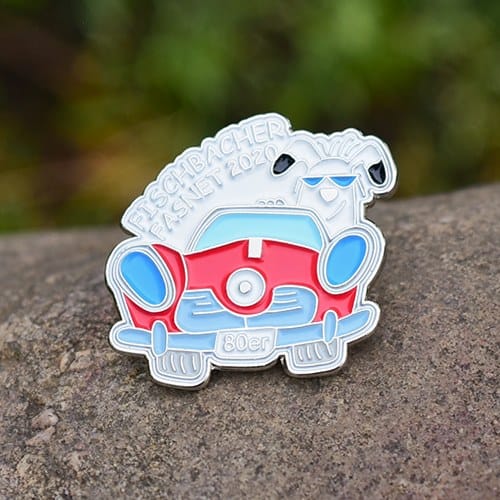
Polished copper gives a warm, reddish-brown metal that suits earthy palettes, outdoor and craft brands and vintage designs. Like copper anywhere, it can darken and develop a patina with time, which some people like and others don't. Antique copper builds that aged look in from the start.
Black nickel
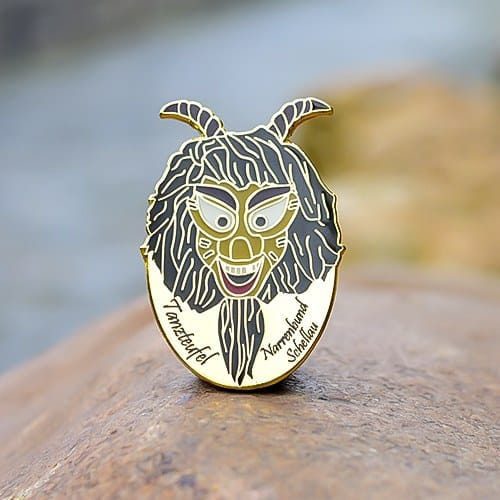
Black nickel is a dark, glossy, gunmetal-gray finish. It isn't pure black: at some angles it catches the light and looks silvery gray. Bright enamel colors pop against it, which suits illustrated pins and modern logos, and unlike dyed black it works on hard enamel.
Antique finishes
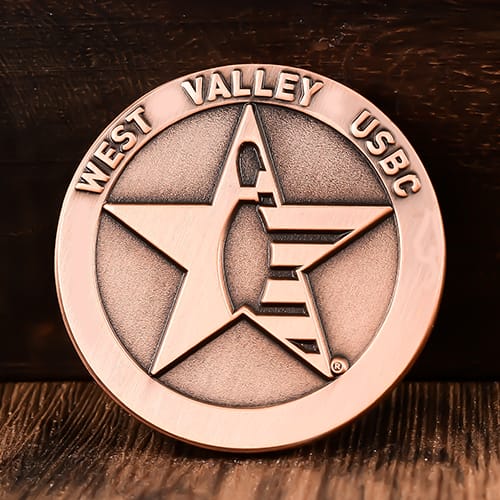
An antique finish starts as normal plating. The piece is then darkened and the raised areas are polished back, leaving the dark tone in the recesses and bright metal on the high points. The contrast makes relief, lettering and fine detail easy to read, and the piece looks minted and aged rather than new. Antique gold, silver, copper, brass and bronze all work this way.
It's the classic choice for die struck pins, 3D sculpted pins, challenge coins, medals and belt buckles, and on coins it often pairs with a few areas of soft enamel color. An antique finish needs relief to work, though. On a hard enamel pin, where color and metal are polished into one flat surface, there's little for the darkening to settle into.
Rose gold
Rose gold jewelry gets its pink tone from copper mixed into gold, and rose gold plating gives a pin that same soft, warm color. It suits fashion, wedding, beauty and lifestyle brands and looks good with pastels, white and black. Softer enamel colors help the metal still read as pink rather than plain gold.
Rainbow plating
Rainbow plating gives the metal an iridescent, oil-slick shimmer that shifts between purple, blue, green and gold as the pin moves. Pin makers often call it anodized. The effect varies from piece to piece and can't be matched to a code, so no two pins in a run look exactly alike. Most makers offer it on soft enamel pins, and it's popular for artist pins and limited variants.
Dyed black
Dyed black colors the metal a flat, true black that's darker and less shiny than black nickel. Outlines look like ink, so it suits line-art illustration and graphic designs with bright fills. Because the polishing that hard enamel needs would remove the dye, dyed black is a soft enamel finish.
Dual plating
Dual plating puts two finishes on one piece, with one area protected while the other is plated: a gold crest on a silver field, gold lettering on a black nickel coin, or a two-tone logo. It works best where the two areas are clearly separated in the design. Your proof shows exactly which areas get which finish, and your quote shows whether it adds cost.
Polished, satin and sandblasted textures
Texture changes a finish as much as color does.
- Polished metal is mirror-bright. It looks crisp and premium, and it shows fingerprints.
- Satin metal is brushed to a soft, low sheen that looks understated. If you'd like a satin finish, ask on your quote and we'll confirm it on your proof.
- Sandblasted areas are blasted to a fine matte texture, usually the recessed background of a die struck pin or an uncolored coin, so polished raised lines and lettering stand out. Light lettering on a sandblasted field can be hard to read, so antique darkening or a color fill sometimes works better.
How to choose a finish
- Start from your colors. Warm palettes of reds, oranges and browns sit well on gold or copper; cool palettes on silver or black nickel.
- Think about where it's worn. A pin worn with a suit should match the wearer's other metals; see what is a lapel pin for menswear tips.
- No color? Go antique. Die struck and 3D designs come alive with an antique finish.
- Match what already exists. Use the same finish as earlier pins, coins or medals in a series so they look like a set.
- Selling pins? The same die can be plated twice for a variant edition. See how to make enamel pins.
- Still unsure? Ask to see two finishes on your proof and compare.
Care is the same for every finish: wipe with a soft, dry cloth, skip metal polish and abrasive cleaners, which can strip plating, and store pins and coins so they don't rub together.
Choose your plating on a free proof
Tell us the look you want, or ask to see two finishes side by side. You'll get a free proof and an all-in quote within one business day. Lapel pins start at 25 pieces.
Get a free quote