Challenge coin meaning
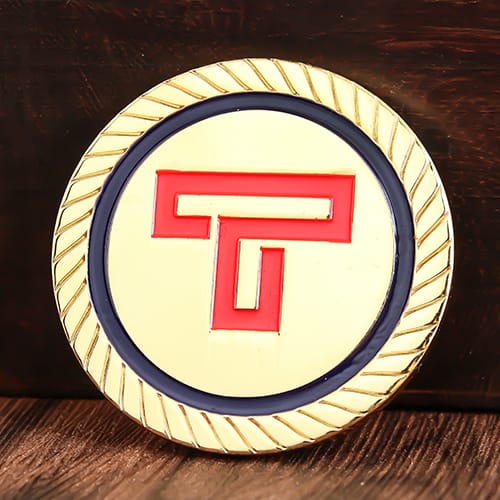
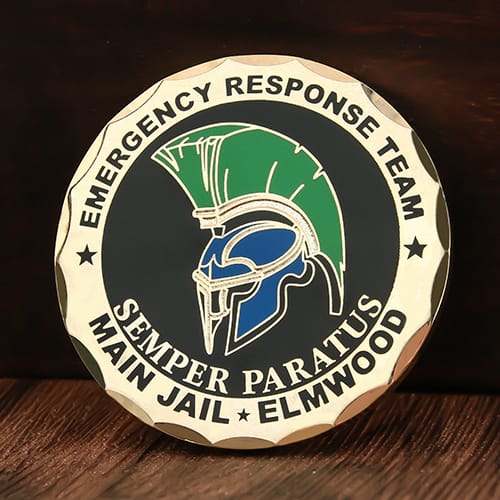
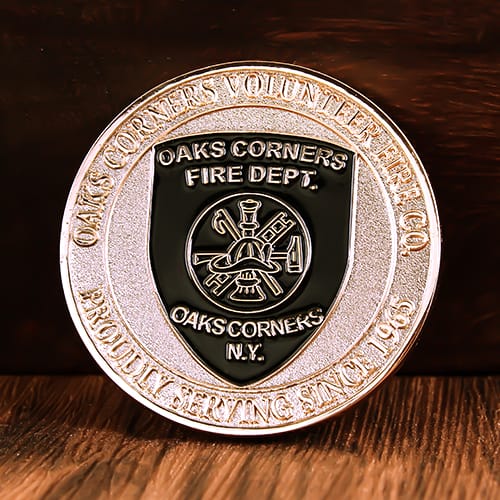
A challenge coin is a small medallion that stands for membership in a group. The front usually carries a unit, agency or organization's emblem, and the back a motto, dates or a dedication. Most are 1.5 to 2 inches across and about 3–4 mm thick, made of plated metal with enamel color, and many have patterned or engraved edges.
What gives a coin its value is how it's received. Many unit coins can't be bought: they're handed over by a commander, chief or leader as a way of saying “you belong here” or “thank you for what you did.” Others mark a deployment, a promotion, a retirement or an event. A coin someone earned often sits on their desk or in a display case for the rest of their career.
Where the challenge coin tradition comes from
No one knows exactly how challenge coins began, and most origin stories are best treated as legends. The ones you'll hear most often:
- The World War I pilot (legend). A wealthy lieutenant supposedly had bronze medallions struck for his flying squadron. One pilot, shot down and captured, escaped and reached French lines, where the medallion proved he was American and saved him from being shot as a spy. It's a good story, but historians haven't been able to verify it.
- Vietnam-era bars (often cited). Soldiers are said to have carried tokens to prove they had served in combat, and the habit of demanding to see them turned into coin checks.
- Special Forces (often cited). Several accounts credit US Army Special Forces units of the 1950s and 1960s with making unit coins to show who belonged.
The spread is better documented than the start. The oldest surviving unit coins commonly cited date from the 1950s, the custom grew across the US military in the second half of the 20th century, and US presidents have had their own coins since the 1990s. From the military it moved into police and fire departments, government agencies, companies and clubs.
How a coin check works
The coin check is the “challenge” in challenge coin. It's an informal game with no official rulebook, and every unit and group has its own house rules. A common version goes like this:
- The challenger draws their coin and raps it on the bar or table, or holds it up and calls a coin check.
- Everyone challenged has a moment to produce their own coin, often within a step or an arm's reach.
- Anyone who can't produce a coin buys a round for the challenger and everyone else who had theirs.
- If everyone produces a coin, the challenger buys the round instead.
House rules often add a few twists: you're expected to carry your coin at all times, dropping it can count as a challenge to everyone present, and a defaced coin traditionally doesn't count. Plenty of groups swap the drinks for coffee, push-ups or a donation to a good cause. If you're new to a unit or department, ask how they play before you start a challenge.
Who gives challenge coins
Coins started in the military, but today they're given wherever a group wants a lasting way to mark belonging or say thanks.
| Who | Typical occasions | Common design elements |
|---|---|---|
| Military units | Deployments, changes of command, promotions, retirements, outstanding work | Unit crest, motto, operation name and dates |
| Police and sheriff's offices | Academy graduation, swearing-in, promotions, retirements, memorials | Badge or star shape, department name, motto |
| Fire departments and EMS | Academy graduation, promotions, retirements, station anniversaries, memorials | Maltese cross, station or company number, apparatus, motto |
| Government agencies and officials | Official visits, thanks to staff and partners, milestones | Agency seal (authorized use only), office name |
| Companies | Milestones, safety records, leadership awards, team wins | Logo, company values, year |
| Clubs, fraternal groups and nonprofits | Membership, anniversaries, donor and volunteer thanks | Crest or logo, founding year, motto |
For design ideas specific to each, see our pages on military challenge coins, police challenge coins and firefighter challenge coins.
How to present a challenge coin
There's no single correct way, but in many units the customary presentation is the handshake pass: the coin moves from your palm to theirs during a handshake, so the moment stays personal rather than feeling like a handout.
- Hold the coin flat in your right palm, pinned lightly with your fingers so it doesn't drop.
- Say what it's for. One specific sentence about what the person did means more than a general thank-you.
- Shake hands and let the coin slide into their palm as you grip.
- Give them a moment to look at it before you move on.
Formal settings are different. At retirements, promotions, graduations and award ceremonies, coins are often presented openly, sometimes in a presentation box, so the audience can see and photos can be taken. In a company setting, an open presentation usually feels more natural than a palmed handshake. Either way, who hands the coin over matters: a coin from a commander, chief or CEO in person carries more weight than one left on a desk.
How to carry and display challenge coins
- Carrying: a pocket or a small leather coin pouch works. Keeping the coin away from keys and loose change protects the plating and enamel.
- Displaying: wall racks, desk stands, shadow boxes and flag cases with coin slots are all common. Stand coins so both sides can be seen if the back has a dedication.
- Protecting: clear PVC sleeves and airtight acrylic capsules keep fingerprints and air off the finish. We can pack coins in either, or in a velvet presentation box.
- Cleaning: wipe with a soft, dry cloth. Skip metal polish, abrasive cleaners and ultrasonic cleaners, which can strip plating and damage enamel.
What makes a good challenge coin design
- One strong front image. A crest, badge or emblem that reads from arm's length. Save the small details for the back.
- Use the back. Motto, dates, unit or station details, or a short dedication. Long text fits well around the edge, which can be laser-engraved.
- The right size. 1.75 inches is the most common; go to 2 inches or larger for detailed crests on both sides or a heavier presentation coin.
- Readable text. Keep lettering at least 1 mm tall at the final size.
- A finish that suits the design. Antique plating flatters fine detail and looks traditional; polished plating with bright enamel suits bold, colorful designs. 3D relief, cut-outs and shapes like shields are possible too.
- Numbering for limited runs. Laser-engraved serial numbers make deployment or anniversary coins feel one of a kind.
- Authorization for official insignia. Coins with an official seal or insignia are for the unit, agency or organization entitled to use it, so get sign-off from the right office before you order.
Our custom challenge coins page covers the full range of options. Artwork can be a rough sketch: our artists redraw it as vector for free, and the first proof usually arrives within 1–2 business days.
Design your own challenge coin
Send a sketch, your crest or just a description. You'll get a free proof with unlimited revisions and an all-in quote within one business day, with the minimum confirmed on your quote.
Start a coin quote